

Introduction
The world of watches is vast, diverse, and layered — and that’s where the concept of a watches hierarchy becomes essential. Whether you’re a beginner trying to understand why some watches cost $200 while others cost $200,000, or a collector evaluating your next investment piece, the hierarchy of watch brands helps create clarity in a complex market.
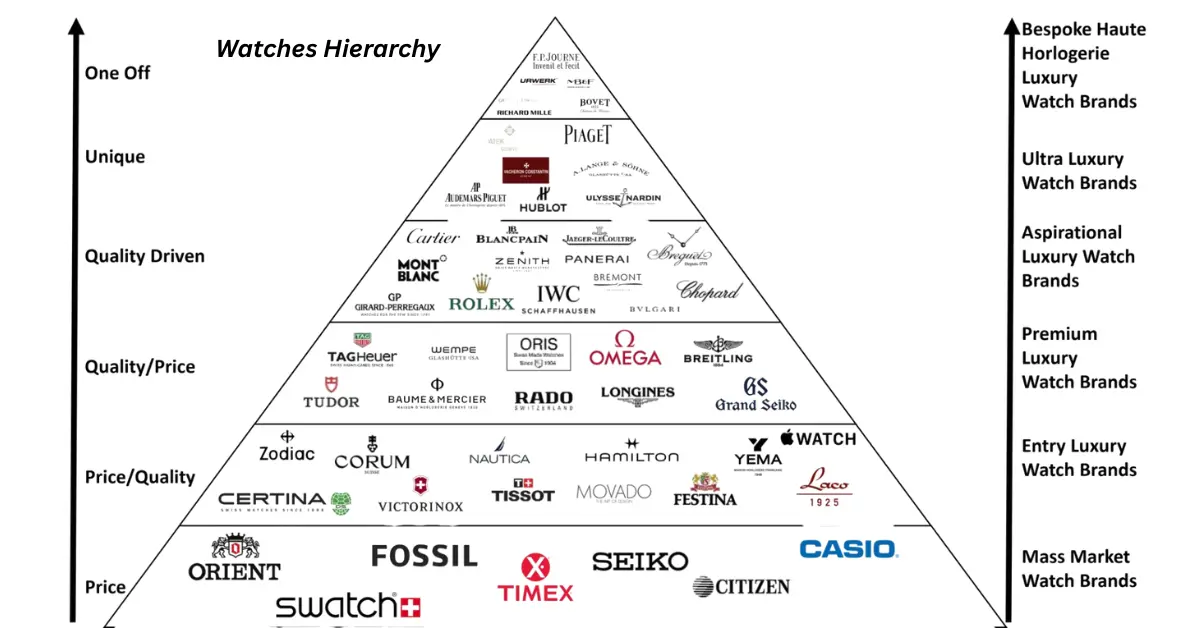
A watches hierarchy is a structured ranking system that categorizes watch brands into different tiers based on their craftsmanship, movement quality, heritage, materials, exclusivity, innovation, and price. Instead of viewing watches solely as fashion accessories, this hierarchy showcases how brands differ in engineering, artistry, and prestige — giving enthusiasts a deeper appreciation of what makes a timepiece truly valuable.
Understanding watch brand tiers matters because it guides consumers in making smarter buying decisions. It helps identify which brands provide the best value at each price point, which ones carry long-term prestige, and which stand as icons of horological excellence. From affordable entry-level brands that offer reliability, to haute horlogerie houses known for hand-finished movements and centuries of heritage, the hierarchy reveals how each tier serves a unique purpose in the world of watchmaking.
Watches are typically categorized using several factors:
- Price — a general indicator of materials, manufacturing, and brand positioning
- Craftsmanship — the level of finishing, hand-assembly, and attention to detail
- History & Heritage — how long the brand has been producing watches and its influence on horology
- Movement Quality — from mass-produced quartz to in-house mechanical calibers
- Prestige & Exclusivity — brand reputation, collectability, and rarity
Altogether, these elements form a structured understanding of how watch brands compare — a foundation that helps both newcomers and experts navigate the fascinating world of horology.
What “Watches Hierarchy” Means
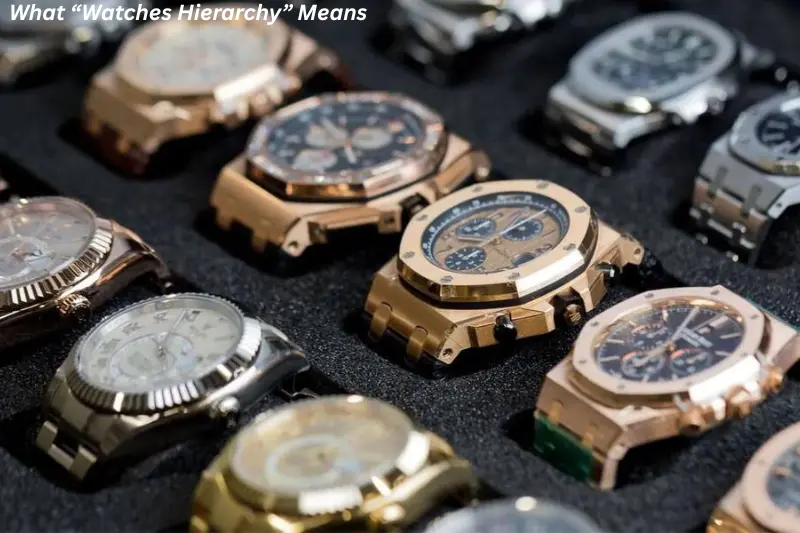
The term “watches hierarchy” refers to the structured ranking of watch brands based on their craftsmanship, technology, prestige, and overall value in the world of horology. Unlike simple price comparisons, a watches hierarchy provides a deeper understanding of why some brands are considered superior, how their timepieces are built, and what sets them apart in terms of engineering and legacy.
At its core, the hierarchy is designed to help watch enthusiasts compare brands across different levels. Watches are not created equal — some are mass-produced for affordability and convenience, while others are hand-assembled with intricate mechanical movements that take months to complete. The hierarchy highlights these differences clearly, making it easier to see where each brand stands in the wider luxury landscape.
A proper watches hierarchy usually includes several tiers, such as:
- Entry-Level Watches
- Entry-Level Luxury
- Mid-Tier Luxury
- High-End Luxury
- Haute Horlogerie
- Ultra-Luxury & Independent Brands
Each tier represents a significant jump in skill, materials, finishing, accuracy, design philosophy, and exclusivity. For example, moving from basic quartz watches into true luxury often means transitioning from factory-produced components to in-house mechanical movements, sapphire crystals, hand finishing, and heritage-driven craftsmanship.
Ultimately, the concept of watches hierarchy exists to bring clarity. It gives collectors, beginners, and enthusiasts a practical framework to understand the watch world — from everyday reliable brands to the most prestigious names in horological history.
Why Watch Brand Tiers Matter

Understanding watch brand tiers is essential for anyone exploring the world of watches — from first-time buyers to seasoned collectors. These tiers aren’t just labels; they provide a clear framework for comparing brands based on quality, heritage, and long-term value. Knowing where a brand stands in the watches hierarchy helps you make smarter, more confident purchasing decisions.
Helps Buyers Understand Value for Money
Two watches can look similar but differ hugely in movement quality, durability, and craftsmanship. Brand tiers reveal what you are really paying for — whether it’s basic functionality, precision engineering, or hand-finished artistry.
Guides Collectors Toward Long-Term Investments
In the world of watch collecting, some brands hold their value far better than others. Higher tiers often include timepieces known for stability, demand, and resale strength. Understanding the hierarchy helps buyers choose watches that will remain desirable over time.
Highlights the Differences in Craftsmanship and Engineering
As you move up the hierarchy, watches transition from mass-produced components to in-house movements, meticulous finishing, and advanced complications. The tiers show where these leaps in quality occur.
Creates Clarity in a Crowded Market
Thousands of watch models are released every year. Watch brand tiers simplify this overwhelming landscape by categorizing brands into recognizable levels — making comparisons faster and clearer.
Enhances Appreciation for Horology
The hierarchy helps enthusiasts understand the artistry behind high-end watchmaking — from hand-polished components to complex tourbillons and perpetual calendars. It elevates appreciation for mechanical engineering and the centuries-old traditions behind luxury timepieces.
Prevents Misconceptions About Price and Prestige
Not all expensive watches are high-tier, and not all affordable watches lack quality. The hierarchy breaks these myths by focusing on craftsmanship and heritage, not just price.
Overview of How Watches Are Categorized (Price, Craftsmanship, History, Movement, Prestige)
When building a watches hierarchy, several key factors determine how each brand is ranked. These criteria help distinguish basic, mass-produced watches from high-end luxury and haute horlogerie masterpieces. Understanding these elements makes it easier to see why certain brands occupy specific tiers — and what truly sets them apart.
Price
- Price is often the first indicator of where a brand sits within the hierarchy.
- Entry-level watches are typically priced from $100–$1,500.
- Luxury watches usually start around $3,000 and can go well beyond $100,000.
However, price alone does not define quality. Some brands charge more due to marketing, while others justify high prices with craftsmanship, innovation, and exclusivity.
Craftsmanship
Craftsmanship refers to the level of detail, finishing, and assembly that goes into a watch.
Key distinctions include:
- Machine-made vs. hand-finished components
- Quality of polishing and engraving
- Assembly by automated systems vs. master watchmakers
Higher tiers in the watches hierarchy often feature:
- Hand-beveled edges
- Hand-polished bridges
- Superior case finishing
- More intricate detailing
This craftsmanship is one of the strongest contributors to a brand’s rank.
History & Heritage
A brand’s heritage plays a significant role in its prestige and placement in the hierarchy.
Factors include:
- How long the brand has existed
- Its contributions to horological innovation
- Historical models and milestones
- Reputation among collectors
Brands like Patek Philippe and Vacheron Constantin dominate high tiers because they have centuries of experience and iconic contributions to watchmaking.
Movement Quality
The movement — the engine that powers the watch — is one of the most important ranking factors.
Movements can be:
- Quartz (battery-powered) — affordable, reliable, mass-produced
- Mechanical (manual or automatic) — complex, traditional, more prestigious
Higher-tier brands often use:
- In-house movements
- Hand-assembled components
- Advanced complications (tourbillons, perpetual calendars, minute repeaters)
- Superior accuracy and finishing
The more complex and finely finished the movement, the higher the watch sits in the hierarchy.
Prestige & Exclusivity
Prestige reflects a brand’s reputation, desirability, and cultural significance.
Exclusivity includes:
- Limited production numbers
- Hard-to-acquire releases
- Waitlists
- Collector demand
Brands that are rare, highly collectible, or historically iconic naturally rise to the top of the hierarchy.
Together, these factors create a clear and structured understanding of the watches hierarchy, helping buyers see why certain watch brands are considered affordable, luxury, high-end, or ultra-prestigious.Overview of How Watches Are Categorized (Price, Craftsmanship, History, Movement, Prestige)
When building a watches hierarchy, several key factors determine how each brand is ranked. These criteria help distinguish basic, mass-produced watches from high-end luxury and haute horlogerie masterpieces. Understanding these elements makes it easier to see why certain brands occupy specific tiers — and what truly sets them apart.
Entry-Level Watch Brands
Entry-level watches form the foundation of the watches hierarchy, offering reliability, accessibility, and impressive value without the high price tags associated with luxury brands. These watches are ideal for beginners who want quality timepieces without a heavy investment, and for everyday wearers who prioritize durability and accuracy.
While they may not feature the advanced complications or hand-finished movements found in higher tiers, entry-level watches still deliver exceptional performance and craftsmanship for their price.
Characteristics of Entry-Level Watch Brands
Affordable Pricing
Typically priced between $100 and $1,500, entry-level watches are designed to offer solid performance at a reasonable cost.
Reliable Movements
These watches commonly use:
- Quartz movements — known for accuracy and low maintenance
- Entry-level automatic movements — often outsourced but well-built
Robust Build Quality
Although not hand-finished, entry-level watches often use dependable materials such as:
- Stainless steel cases
- Mineral or sapphire crystals
- Leather, rubber, or steel straps
Mass Production
These brands generally use large-scale production methods, resulting in lower costs and consistent quality.
Great for Everyday Use
Because they are durable and affordable, entry-level watches are perfect for casual wear, work environments, and first-time watch enthusiasts.
Popular Entry-Level Watch Brands
- Seiko
Known for exceptional reliability, in-house movements, and unbeatable value. The Seiko 5 series, Prospex, and Presage lines are favorites among beginners and collectors alike. - Citizen
A pioneer in solar-powered technology (Eco-Drive), Citizen offers accurate, low-maintenance watches with modern designs. - Orient
Famous for offering true mechanical watches at budget-friendly prices. Many models feature fully in-house movements. - Tissot
A Swiss brand offering accessible automatic watches with strong heritage. Known for models like the PRX and Tissot Gentleman. - Hamilton
Once American, now Swiss-made, Hamilton offers pilot, field, and dress watches with outstanding value and stylish designs.
Who Entry-Level Watches Are Best For
Entry-level watches are ideal for:
- Beginners entering the watch world
- People who want reliability without luxury prices
- Anyone seeking stylish, functional daily wear
- Collectors looking for budget-friendly automatic watches
Typical Price Range
$100 to $1,500
This tier is the gateway into the broader world of horology — offering quality, performance, and style without the premium cost of higher-tier luxury brands.
Entry-Level Luxury Watch Tier
Moving one step higher in the watches hierarchy, the entry-level luxury tier bridges the gap between accessible everyday watches and true Swiss luxury. Brands in this category offer improved craftsmanship, better materials, and stronger heritage while still remaining within reach for many buyers.
This tier is ideal for those who want a higher-quality timepiece with a touch of luxury, without stepping into the high-end price range.
Characteristics of Entry-Level Luxury Watches
Higher Quality Materials
Expect upgrades such as:
- Sapphire crystal (scratch-resistant)
- Better steel finishing
- Ceramic bezels
- More premium straps and bracelets
Swiss-Made or In-House Movements
Many watches in this tier offer:
- Swiss automatic movements
- Entry-level in-house calibers
- Better accuracy and durability than basic quartz watches
Improved Craftsmanship
Compared to entry-level brands, these watches often have:
- Cleaner finishing
- More detailed dials
- Better case polishing
- Refined design language
Strong Brand Heritage
Many brands in this tier have decades — sometimes over a century — of Swiss watchmaking history.
Affordable Luxury Experience
Consumers get a taste of real luxury without paying the premium of mid-tier or high-end models.
Mid-Tier Luxury Watches
Mid-tier luxury represents a significant step upward in the watches hierarchy, offering superior engineering, refined craftsmanship, and stronger brand prestige. Watches in this category are often the first true luxury timepieces many collectors invest in. They provide a noticeable upgrade in design, materials, and movement performance compared to entry-level luxury brands.
This tier is where buyers begin to see the deeper artistry of Swiss watchmaking — including in-house calibers, richer finishing, and more iconic models.
Characteristics of Mid-Tier Luxury Watches
Superior Build Quality
Expect robust construction and high-end materials such as:
- High-grade stainless steel
- Sapphire crystals with anti-reflective coating
- Ceramic bezels
- More complex case designs and finishing
Better Movements
At this level, movements become a defining factor. Many watches offer:
- In-house automatic movements
- COSC-certified chronometers
- Higher accuracy and reliability
- Smoother sweeping seconds hands
- Longer power reserves
Recognizable Brand Prestige
Brands in this tier have solid reputations for innovation, heritage, and quality. Their designs often carry iconic status within the watch community.
Noticeable Design Refinement
Mid-tier luxury watches often include:
- Sunburst or textured dials
- High-quality lume
- Precisely chamfered edges
- Stronger attention to detail and finishing
More Collectible Models
Many watches in this tier hold their value well and are sought after by collectors worldwide.
Who This Tier Is Best For
Mid-tier luxury watches are ideal for:
- Serious enthusiasts looking to upgrade to true luxury
- Collectors wanting iconic, well-respected models
- Buyers seeking reliable, durable, and prestige-rich designs
- Those who appreciate craftsmanship but want to stay below high-end price levels
Typical Price Range
$3,500 to $7,000
Mid-tier luxury is where watches begin to show the depth of traditional craftsmanship and design excellence — making this tier a favorite among enthusiasts ready to move beyond entry-level luxury.
High-End Luxury Watch Brands
The high-end luxury tier represents a major leap in the watches hierarchy, showcasing brands known for serious horological innovation, rich heritage, and exceptional craftsmanship. Watches in this category deliver a level of refinement, accuracy, and prestige that sets them apart from mid-tier luxury models. They feature advanced engineering, in-house movements, premium materials, and finishing techniques that reflect decades — sometimes centuries — of watchmaking expertise.
This tier is where luxury truly becomes world-class, both in performance and reputation.
Characteristics of High-End Luxury Watches
Exceptional Craftsmanship
High-end luxury watches feature:
- Hand-finished components
- Polished bevels and detailed casework
- High-grade steel, titanium, gold, and ceramic materials
- Complex dial textures and immaculate finishing
The attention to detail is significantly elevated compared to previous tiers.
High-Performance In-House Movements
Movements in this category often include:
- Fully in-house automatic or manual calibers
- COSC-certified chronometer accuracy
- Advanced technologies (co-axial escapements, silicon components)
- Extended power reserves
These watches are designed for accuracy, durability, and long-term performance.
Strong Heritage and Global Prestige
Brands in this tier are globally recognized and respected, often with dozens of innovations and longstanding contributions to watchmaking.
Iconic Models With Strong Identity
Many watches in this segment have decades of history and remain highly collectible.
Superior Resale and Investment Potential
While not all models appreciate, high-end luxury watches often retain their value better than lower tiers due to demand, quality, and heritage.
Who This Tier Is Best For
High-end luxury watches are ideal for:
- Watch enthusiasts wanting exceptional engineering and heritage
- Buyers looking for prestigious, long-lasting timepieces
- Collectors focusing on strong resale value and iconic models
- Professionals seeking a refined, truly luxurious watch
Typical Price Range
$6,000 to $15,000+
This tier blends high-end materials, impeccable craftsmanship, and horological prestige, marking a major milestone for collectors and enthusiasts entering the upper tiers of luxury watchmaking.
Conclusion
The watches hierarchy provides a clear roadmap through the intricate world of timepieces, helping both beginners and seasoned collectors understand the differences between brands, craftsmanship, and price tiers. From entry-level watches offering reliability and affordability, to ultra-luxury and haute horlogerie pieces showcasing centuries of hand-finished mastery, each tier serves a unique purpose in the horological landscape.
Understanding watch brand tiers matters not just for selecting the right timepiece, but also for appreciating the artistry, innovation, and heritage behind each model. By considering factors such as price, craftsmanship, movement quality, history, and prestige, buyers can make informed decisions that match their style, budget, and long-term goals.
Whether you are purchasing your first watch, expanding a collection, or seeking an investment-grade timepiece, the watches hierarchy acts as a trusted guide. It clarifies the distinctions between accessible everyday watches, high-end luxury models, and the rarest horological masterpieces, ensuring every watch enthusiast can navigate the world of watches with confidence and insight.
