

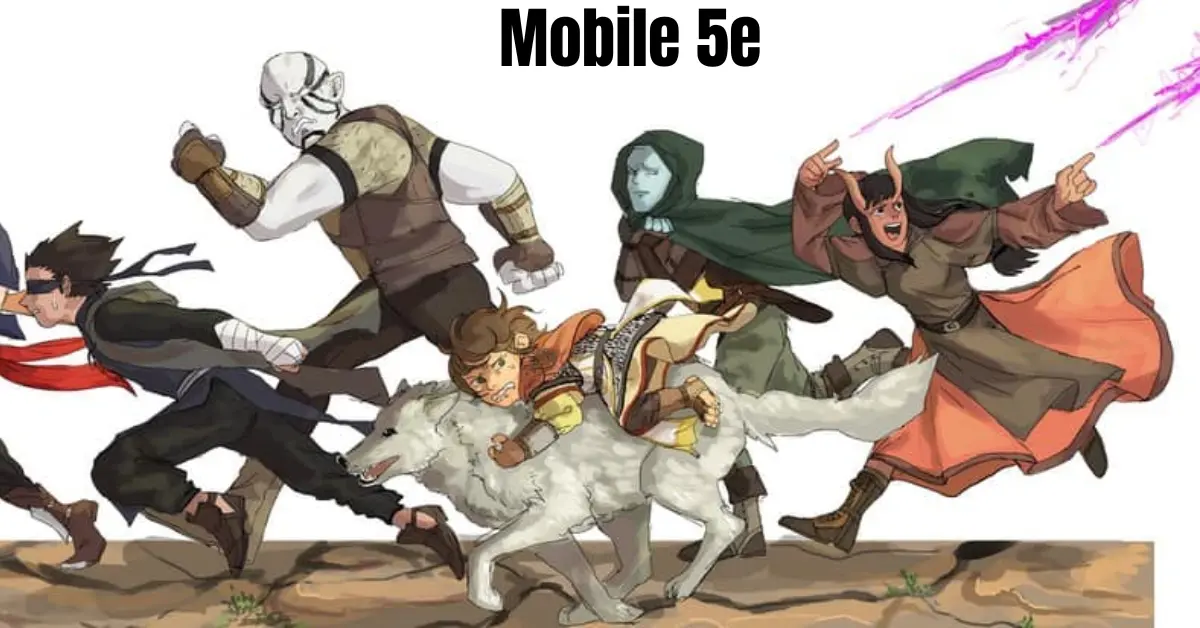
Introduction: What Is Mobile 5e?
In Dungeons & Dragons 5th Edition, Mobile 5e is one of the most popular feats for players who want to enhance their speed, improve their movement in D&D 5e, and unlock true hit-and-run combat freedom. The Mobile feat is designed for characters who thrive on agility—darting into melee range, striking quickly, and slipping away before enemies can retaliate.
This feat is perfect for players who prefer fast-paced playstyles, where positioning and movement are just as important as raw damage. Whether you’re a Monk sprinting across the battlefield, a Rogue weaving through enemies, or any martial class looking for more control over combat flow, Mobile offers a significant upgrade to your overall mobility.
Players choose mobility-based feats like Mobile because battlefield control is often the difference between taking unnecessary hits and staying one step ahead of danger. Increased speed 5e, better maneuverability, and the ability to avoid opportunity attacks all make the Mobile feat a strong choice for skirmishers, melee DPR builds, and characters who want to dominate the battlefield through movement rather than armor alone.
Mobile 5e: Official Rules (Full Breakdown)

The Mobile feat 5e provides one of the strongest movement boosts available in Dungeons & Dragons 5th Edition. While simple on the surface, each part of the feat dramatically enhances your ability to control positioning, avoid damage, and execute skirmisher-style tactics.
Here is the full breakdown of what Mobile offers:
+10 Feet to Your Speed
The first benefit is straightforward: your base speed in 5e increases by 10 feet.
This bonus applies at all times—whether you’re walking, running, engaging in combat, or exploring the world. It stacks with other sources of movement, such as a Monk’s Unarmored Movement or class features that modify movement in D&D 5e.
No Opportunity Attacks from Targets You Attack
One of the strongest elements of the Mobile feat is the ability to avoid opportunity attacks 5e from creatures you’ve made a melee attack against, even if the attack misses.
This allows you to strike an enemy and then reposition safely without risking a counterattack. It’s ideal for hit-and-run tactics, Monk flurries, Rogue disengagement strategies, or any build where mobility is essential.
Ignore Difficult Terrain When You Dash
When you take the Dash action, Mobile 5e allows you to ignore difficult terrain.
This is especially powerful in environments like forests, swamps, ruins, or magical zones where terrain hinders movement. Being able to dash freely means you can outmaneuver slower enemies, reach objectives faster, and maintain control of the battlefield without sacrificing speed.
May be you like it:
Technology Quotations – Inspiring Tech Quotes And Innovation Sayings
Tech News Briefing Podcast – Stay Updated with Daily Technology Insights
Tech News Website Crossword Clue – Common Answers And Solving Tips
Tech News Website NYT Crossword Clue – Answers And Solving Tips
Technology News of Today – Latest Tech Updates, AI, and Gadgets 2025
Who Should Take the Mobile Feat in 5e?
The Mobile feat 5e shines brightest on characters who rely on speed, positioning, and quick melee engagement. While any class can technically benefit from enhanced movement, certain builds gain far more value because Mobile complements their core combat style.
Below are the classes and archetypes that benefit most from Mobile in Dungeons & Dragons 5e.
Monks
Monks are the number one choice for Mobile.
Their already high movement speed, combined with Mobile’s extra 10 feet, creates incredible speed stacking 5e potential. Monks often strike multiple targets, then reposition to avoid taking damage—exactly what Mobile is made for.
Rogues
Rogues thrive on hit-and-run combat.
Because Sneak Attack requires precise positioning, a Rogue with Mobile can enter melee, land a strike, and escape without needing to spend a Bonus Action on Disengage. This frees their bonus action for Cunning Action, Dash, or other tactical choices.
Barbarians
Barbarians benefit from Mobile’s ability to avoid opportunity attacks, especially when charging deep into enemy lines. The increased movement in D&D 5e lets them maintain pressure and chase down ranged or spellcasting opponents who try to keep distance.
Rangers
Rangers—especially melee or two-weapon builds—use Mobile to maintain spacing and track high-priority targets. Hunter and Gloom Stalker subclasses synergize well with extra movement.
Melee Clerics & Druids (Situational)
Nature Clerics, War Clerics, and Circle of the Moon Druids who frequently enter melee can use Mobile to stay safe. While not always optimal for casters, mobility becomes extremely valuable for frontline spellcasters who need freedom to reposition without drawing attacks.
May be you like it:
Gadgets Pronunciation – How to Say Gadgets Correctly in English
Gadgets Brawl Stars – Complete Guide, Tips And Best Gadgets for Every Brawler
Gadgets in a Sentence – Examples, Tips, and Common Mistakes
Mobile 5e Feat – Ultimate Guide Tips And Strategies for D&D 5e
Mabiles Laplace – Advanced Methods Applications And Future Insights
Benefits of Mobile 5e (Why It’s Strong)
The Mobile feat 5e is widely considered one of the best feats for fast, agile characters because it dramatically enhances both offensive and defensive capabilities. Whether you prefer darting in and out of melee or controlling the battlefield through superior speed 5e, Mobile offers several major advantages.
Hit-and-Run Combat Made Easy
One of the defining strengths of Mobile is its synergy with hit-and-run tactics 5e.
Once you make a melee attack against a creature, you’re free to move away without provoking opportunity attacks—even if your attack misses. This allows you to:
- Strike and reposition safely
- Avoid staying in melee range
- Outmaneuver tanky enemies who rely on close-quarters combat
It’s ideal for Rogues, Monks, and other agile builds.
Significantly Better Survivability
Avoiding opportunity attacks is a massive boost to survivability in D&D 5e. Many characters take heavy damage simply because they’re stuck in melee range. Mobile eliminates this problem by letting you control when and where you take risks.
This defensive benefit alone often makes Mobile more impactful than armor upgrades or small AC bonuses.
+10 Feet Movement Speed Across the Board
A flat +10 ft increase to your movement speed in D&D 5e means you can reposition more easily, chase fleeing enemies, or disengage from dangerous situations. It also stacks with class features, spells, and racial traits—making it incredibly powerful for speed-focused builds.
Ignore Difficult Terrain While Dashing
Many battles take place on uneven ground, rubble, swamps, foliage, or magical terrain. Mobile allows you to Dash without being slowed by difficult terrain, giving you a major advantage when enemies struggle to move efficiently.
This benefit often matters more than players realize, especially in high-mobility encounters.
Perfect for Skirmishers and Agile Builds
Mobile works exceptionally well in any build designed around movement, precision strikes, and battlefield control. Characters who need to weave through enemies or maintain distance find Mobile invaluable for staying unpredictable and hard to pin down.
Mobile 5e Compared to Other Movement Feats
While Mobile 5e is one of the strongest mobility-focused feats in Dungeons & Dragons 5th Edition, it’s not the only option. Several other feats and class abilities can improve movement, speed, positioning, or terrain navigation. Understanding how they compare helps players decide whether Mobile is the best choice for their build.
Below is a detailed D&D 5e feats comparison highlighting where Mobile shines and where other feats may be more situationally useful.
Mobile vs Athlete 5e
Athlete improves physical movement, but in a very different way than Mobile. It focuses on climbing, jumping, and getting up from prone efficiently.
- Athlete Pros: Great for vertical movement, physical challenges, exploration.
- Mobile Pros: Far better for combat, speed, and avoiding opportunity attacks.
Verdict: Athlete helps with exploration; Mobile dominates in combat mobility.
Mobile vs Charger 5e
Charger 5e is a situational feat that boosts your ability to deal damage after using Dash.
- Charger Pros: Increases damage when rushing into melee.
- Mobile Pros: More movement, no opportunity attacks, better tactical flexibility.
Verdict: Charger is niche; Mobile is versatile in any combat scenario.
Mobile vs Sentinel (Opposites)
Sentinel reduces enemy movement and punishes retreat. Mobile avoids enemy retaliation and enhances movement. They serve opposite roles:
- Sentinel: Lock down enemies, punish movement.
- Mobile: Escape enemies, ignore opportunity attacks, maintain freedom of movement.
Verdict: Both are excellent, but for completely different playstyles.
Mobile vs Skulker 5e
Skulker helps ranged attackers stay hidden, while Mobile benefits melee skirmishers.
- Skulker Pros: Stealth, ranged combat, staying hidden.
- Mobile Pros: Speed, terrain control, melee positioning.
Verdict: Skulker is for stealth snipers; Mobile is for agile melee fighters.
Mobile vs Racial or Class-Based Movement Boosts
Many classes and races already provide enhanced movement speed 5e, such as:
- Monks (Unarmored Movement)
- Barbarians (Fast Movement)
- Tabaxi (Feline Agility)
- Wood Elves (Base 35 ft speed)
Mobile stacks with all of these, making it even stronger for characters who already excel at speed.
Final Comparison Summary
- Best for Combat Mobility: Mobile 5e
- Best for Lockdown Control: Sentinel
- Best for Exploration Movement: Athlete
- Best for Stealth Movement: Skulker
- Best for Charge Attacks: Charger
Mobile remains one of the most universally powerful mobility feats in DnD 5e, especially for melee classes that benefit from striking and repositioning quickly.
Best Builds With Mobile 5e
The Mobile feat 5e becomes even more powerful when paired with classes and builds designed around high movement, hit-and-run tactics, or battlefield control. Below are some of the best Mobile 5e builds that maximize the feat’s strengths.
Monk Mobile Build (Speed-Stacking Specialist)
Monks are the ultimate beneficiaries of Mobile. Their Unarmored Movement bonus already gives them exceptional speed 5e, and when combined with the Mobile feat, they become one of the fastest classes in the game.
Why it works:
- Mobile stacks with Monk speed bonuses
- Flurry of Blows lets you hit multiple enemies, then escape safely
- Avoiding opportunity attacks keeps you alive longer
- Perfect for skirmishing and battlefield repositioning
Ideal subclasses:
- Way of Shadow (stealth & mobility)
- Open Hand (stunning strike + retreat)
- Drunken Master (redirect movements & free disengage benefits)
Rogue Mobile Build (Sneak Attack Skirmisher)
Rogues rely heavily on positioning to trigger Sneak Attack. Mobile gives them the freedom to move into melee, strike, and escape without using Cunning Action for disengage—saving their Bonus Action for Dash or utility.
Why it works:
- Bonus Action freed for other uses
- Great synergy with high Dexterity builds
- Perfect for hit-and-run tactics
- Works for melee and hybrid builds
Ideal subclasses:
- Assassin (burst damage + mobility)
- Swashbuckler (already slippery; Mobile makes them unstoppable)
- Scout (mobility synergy)
Barbarian Mobile Build (High-Speed Bruiser)
Barbarians usually struggle with mobility, especially when wearing little armor. Mobile helps them bypass opportunity attacks, chase down ranged attackers, and reposition during rage.
Why it works:
- Mobile eliminates the need for Disengage
- Helps reach backline spellcasters quickly
- Synergizes with Fast Movement
- Turns Barbarians into agile frontline predators
Ideal subclasses:
- Totem Barbarian (Wolf) – team support + mobility
- Beast Barbarian – claws + mobility = deadly
- Zealot – relentless pursuit
Ranger Mobile Build (Guerilla Tactician)
Rangers—especially melee or dual-wielding builds—benefit greatly from superior movement and terrain control.
Why it works:
- Perfect for flanking
- Excellent synergy with Hunter’s Mark pursuit
- Works well in outdoor/difficult terrain heavy campaigns
- Great for chasing and kiting enemies
Ideal subclasses:
- Gloom Stalker (high initiative + mobility)
- Hunter (Colossus Slayer) – solid DPR + mobility
- Beast Master (Tasha’s) – coordinate movement with your companion
Druid & Cleric Melee Builds (Situational But Strong)
Not all spellcasters want to stay at range. Some, like Moon Druids or War Clerics, regularly jump into melee and can use Mobile to escape danger without wasting spells or actions.
Why it works:
- Allows casters to dip in and out of melee
- Avoids unnecessary damage
- Great for Circle of the Moon’s beast forms
- Provides freedom to reposition before casting
Ideal subclasses:
- Circle of the Moon (wild shape mobility)
- War Cleric (melee-capable support)
- Tempest Cleric (in-and-out shock tactics)
How to Use the Mobile Feat Effectively In Combat
The Mobile feat 5e is incredibly powerful, but its impact depends on how you use it. When combined with smart positioning and good battle tactics, Mobile lets you control engagements, avoid unnecessary damage, and dictate the pace of a fight. Here’s how to maximize the feat in real gameplay.
Strike → Move → Escape (The Core Mobile Strategy)
The most effective way to use Mobile is with classic hit-and-run tactics. Simply:
- Move into melee range
- Make an attack
- Move out of range without triggering opportunity attacks 5e
This lets you deal damage while avoiding enemy retaliation—perfect for Rogues, Monks, and any lightly armored melee build.
Attack Different Targets Without Fear
Mobile lets you make a melee attack against one enemy, move away safely, then run to another enemy or objective.
This freedom is extremely powerful because you can:
- Weave through enemy lines
- Hit multiple targets across the battlefield
- Pressure key enemies without getting pinned
- Maintain ideal movement strategy DnD
This is especially strong for Monks with multiple attacks or Rogues who want safe repositioning.
Break Up Enemy Formations
Enemies often rely on standing together to block movement or protect weaker allies. Mobile allows you to slip through these frontlines without being slowed or punished.
Use Mobile to:
- Reach enemy casters
- Circle around tanks
- Open paths for allies
- Disrupt enemy “walls” or shield lines
You become a living scalpel that cuts through enemy defenses.
Chase Down Ranged and Fleeing Enemies
With +10 ft of speed 5e, you can quickly close the distance on archers, rogues, or spellcasters who try to kite your party. Mobile helps prevent enemies from keeping their distance or escaping.
This ensures:
- They cannot maintain range advantages
- You can shut down spellcasters
- Fleeing enemies can’t retreat easily
Use Dash for Tactical Positioning
Mobile’s ability to ignore difficult terrain while Dashing gives you superior mobility in rough environments. During combat, Dash becomes not just a movement boost but a battlefield tool.
Use Dash to:
- Escape dangerous zones
- Outflank slow enemies
- Bypass magical terrain hazards
- Reach high-priority targets faster
In environments like forests, ruins, or swamps, this can be game-changing.
Stay Just Out of Reach
Mobile lets you stay exactly where you want to be:
- 5–10 feet away from the boss
- Behind cover after attacking
- At the edge of melee range
- Outside multi-attack threat zones
This makes you extremely hard to pin down and hit.
May be you like it:
Mobile 5e – Complete Guide to Speed Movement and Best Builds in D&D 5e
Gadgets Meaning in English – Definition, Types, Examples And Uses
Gadgets Crossword Clue – Common Answers, Tips And Solving Guide
Smart Watches Compatible with Motorola – Top Motorola Smartwatch Options 2025
Mobile 5e in Roleplay & Exploration
Although the Mobile feat 5e is best known for its combat advantages, its benefits extend far beyond battle. Increased movement speed in D&D and improved maneuverability significantly enhance exploration, travel, roleplaying opportunities, and environmental challenges. Characters with Mobile often feel faster, more agile, and more dynamic in every part of the game—not just when swords are drawn.
Faster Travel and Exploration in 5e
The extra 10 feet of speed applies at all times, meaning you naturally cover more ground during exploration. This is especially helpful when:
- Scouting ahead for the party
- Traversing large dungeons
- Crossing wilderness areas
- Navigating sprawling cities
This advantage is subtle but incredibly impactful in exploration 5e, where movement efficiency often saves time, resources, or spell slots.
Moving Through Difficult Terrain Without Slowing Down
Mobile allows you to ignore difficult terrain while using the Dash action. In non-combat situations, this can dramatically improve your ability to:
- Trek through forests
- Climb over rubble
- Navigate swamps or marshes
- Move across ruins or unstable ground
While other characters struggle, you move effortlessly, making you an excellent guide or scout.
Enhanced Mobility in Stealth or Recon Missions
For characters who engage in scouting, infiltration, or reconnaissance, Mobile provides a constant advantage. You can:
- Sneak behind enemy lines quickly
- Escape when discovered
- Reposition silently and efficiently
- Route around guards or obstacles
Rogues, Rangers, and Monks benefit especially from this synergy.
Better Non-Combat Problem Solving
The increased speed and flexible movement can help solve many non-combat challenges, such as:
- Reaching injured allies quickly
- Jumping across gaps
- Running from collapsing structures
- Navigating chase scenes or timed events
- Reacting faster in social or narrative encounters
Your character simply has more physical freedom and agility than most others.
Roleplay Advantages (How Your Character “Feels” with Mobile)
Mobile enhances your character’s personality through movement. You might roleplay your character as:
- Light-footed and swift
- Graceful and fluid in motion
- Always one step ahead
- Hard to catch, both literally and socially
- Confident in any physical challenge
This adds an extra layer of flair to your character’s presence in the world.
Common Mistakes When Using Mobile 5e
Even the most agile characters can misuse the Mobile feat 5e if they don’t understand its mechanics or overestimate its benefits. Avoiding these common mistakes ensures you get the maximum value from this mobility-focused feat.
Overextending in Combat
One of the most frequent errors is assuming Mobile makes you invincible.
- Moving too far from allies can leave you isolated
- You may still be within reach of enemies with reach weapons or ranged attacks
- Ignoring cover or terrain hazards can lead to unnecessary damage
Tip: Always plan your movement considering enemy reach and battlefield layout.
Forgetting Opportunity Attack Timing
Mobile prevents opportunity attacks only after you make a melee attack against a creature. Some players mistakenly believe it protects against all opportunity attacks, which is not true.
- It does not prevent opportunity attacks if you move without attacking
- It does not protect against spells or abilities that trigger on movement
Tip: Use Mobile strategically by combining attacks with movement for maximum safety.
Mismanaging Dash Actions
While Mobile ignores difficult terrain when you Dash, it does not automatically give you infinite movement.
- Using Dash at the wrong moment can waste movement or actions
- Failing to plan your position for the next turn reduces tactical advantage
Tip: Save Dash for key positioning moves, retreats, or high-priority targets.
Ignoring Synergy With Other Feats or Class Features
Some players take Mobile without considering how it interacts with class abilities.
- Monks benefit far more than heavily armored Fighters
- Rogues can pair it with Cunning Action for extreme mobility
- Failing to combine Mobile with speed stacking 5e features reduces its effectiveness
Tip: Plan your feat choices around your class and build for maximum synergy.
Over-Reliance on Movement
Mobile is powerful, but it doesn’t replace solid combat strategy.
- Avoid thinking mobility alone will save you from bad positioning
- Don’t neglect defense, allies, or tactical choices
Tip: Mobility is a tool, not a crutch. Combine it with smart attacks and positioning.
Conclusion: Is Mobile 5e Worth It?
The Mobile feat 5e is a standout choice for characters who rely on speed, agility, and tactical positioning. From hit-and-run combat to battlefield control, exploration, and roleplay, Mobile provides both combat and non-combat advantages that few other feats can match.
By increasing movement speed 5e, avoiding opportunity attacks, and ignoring difficult terrain while Dashing, Mobile empowers Monks, Rogues, Barbarians, and other agile classes to dominate the battlefield. It is particularly strong when paired with high-speed builds or abilities that stack movement bonuses, creating characters that are fast, deadly, and hard to pin down.
While it’s not universally ideal for every class—heavily armored tanks or spellcasters who rarely enter melee may see less benefit—the versatility, survivability, and tactical freedom Mobile provides make it one of the most valuable mobility feats in D&D 5e.
In short, if your character thrives on movement strategy, speed, and battlefield flexibility, Mobile 5e is absolutely worth taking. It lets you move faster, strike smarter, and escape when needed—making your character feel unstoppable both in combat and exploration.
May be you like it:
Smart Watches That Don’t Need a Phone – Top Standalone Smartwatches in 2025
Smart Watches Low Price – Best Affordable & Budget Smartwatches 2025
T800 Ultra Smart Watch – Features, Reviews, and Best Fitness Tracker
